
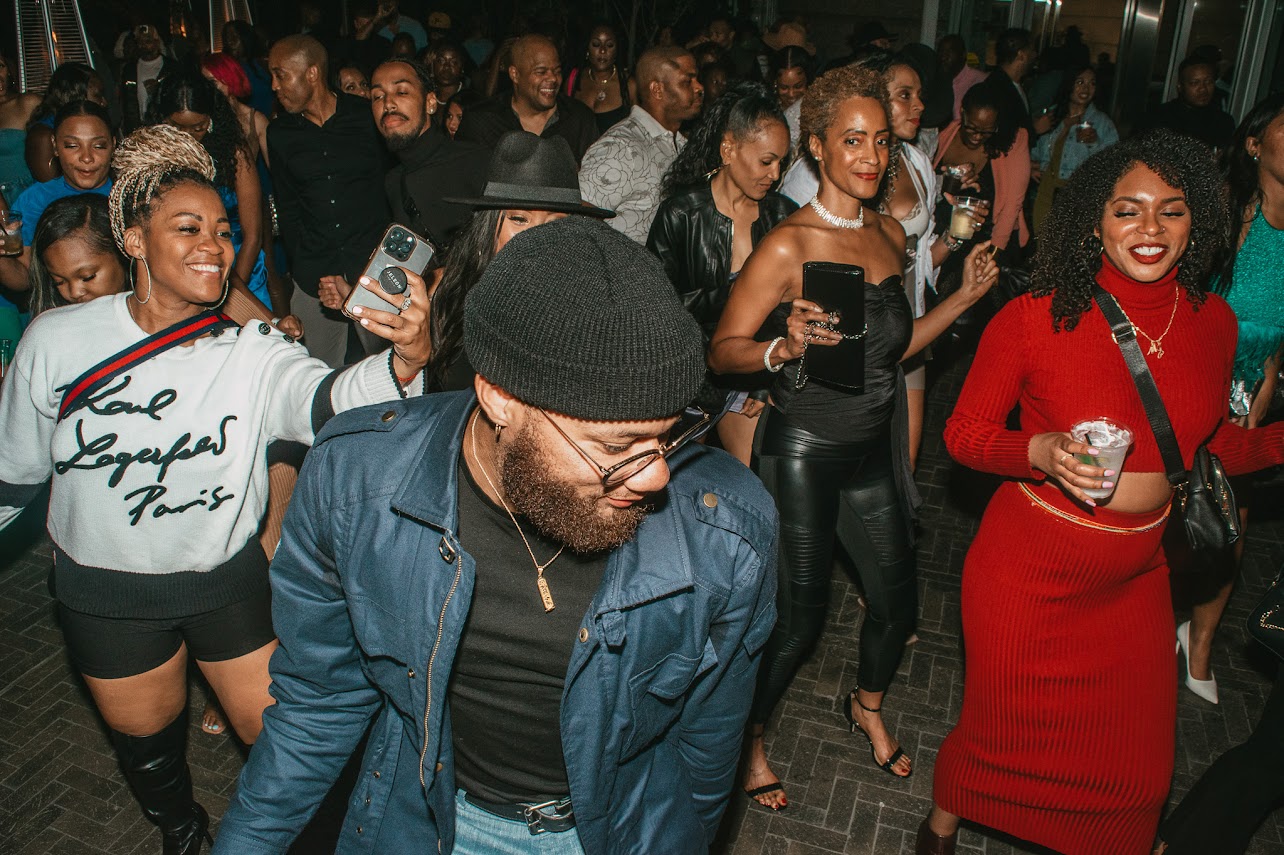
Growth is coming. The question is who actually captures it.
The Number Everyone's Repeating Right Now
$2.5 trillion.
That's where Allied Market Research says the global events industry is headed by 2035, up from $736.8 billion in 2021, a nearly 3.5x expansion at a 6.8% compound annual growth rate. Other research firms peg the near-term number even higher. The Business Research Company puts the industry at roughly $1.46 trillion in 2026 alone, growing at a 9.3% CAGR toward $2.08 trillion by 2030. Corporate events specifically are projected to nearly double, from $325 billion in 2023 to almost $600 billion by 2029.
Every version of this forecast tells the same story: live experiences are one of the fastest-growing categories in the economy.
Here's what none of those headlines mention. Growth at the top of an industry and profitability at the bottom of it are two completely different things. I learned this running The Outlet LA, where we built a 50,000-member community across 400+ events and generated over $2M in revenue. The events business was never short on demand. It was short on a model that let the people actually running events keep what they earned.
That gap is the real story in 2026. Not whether live events are growing (they are), but who's built to capture that growth and who's about to get squeezed out of it.
People Want Experiences More Than Ever
The demand side of this story isn't complicated. It's a decade-long shift in how people spend money, and it's accelerating.
Millennials say it plainly: 78% would rather spend money on a desirable experience than buy something material, and 72% want to increase their experiential spending over the next year, according to research commissioned by Eventbrite. That's not a passing preference. Since 1987, the share of U.S. consumer spending going to live experiences and events has grown 70%.
What's new is that this holds up even when money is tight. Morning Consult's research shows the same pattern that emerged after the 2008 recession is reasserting itself now: when budgets tighten, people cut the things that can be delayed or replaced, and protect the experiences tied to identity, relationships, and memory. PwC found that 49% of Gen Z and 43% of millennials planned to travel over Memorial Day this year, compared to just 29% of Gen X and 21% of boomers. Gen Z is watching every dollar and still showing up for the show.
That's the demand producers are sitting on. It's real, it's growing, and it isn't going anywhere.
But They're Done Getting Nickel-and-Dimed For It
Here's the part that should worry every producer relying on a traditional ticketing platform: the fee model that's funded this industry for two decades is now under direct regulatory fire.
The FTC's Junk Fees Rule took effect in May 2025, requiring live-event ticket sellers to show the full price upfront instead of tacking on fees at the last screen of checkout. In April 2026, the FTC made an example of StubHub, forcing a $10 million consumer settlement for advertising ticket prices without disclosing mandatory fees. That came on top of a lawsuit the FTC and seven states filed against Live Nation and Ticketmaster in late 2025 over their pricing practices. Consumer Reports estimates the average American family loses about $3,200 a year to junk fees across every industry, live events included, and public patience for it has run out.
Early data on what happens after transparency rules kick in is telling. A Consumer Federation of America survey found 62% of people feel more confident comparing prices once full costs are shown upfront, and while some platforms saw a short-term dip in conversion as sticker shock set in, transparency ended up improving retention because fewer people abandoned checkout feeling tricked.
Ticketing platforms built around hidden fees are facing a structural problem. The entire per-ticket fee model was built on hiding the true cost until the last possible second, and that's now illegal in most states.
Growth at the Top, a Profitability Crisis at the Bottom
Here's the part of the $2.5 trillion story that doesn't make the press releases: independent producers and venues, the people actually filling rooms night after night, aren't the ones capturing that growth.
The National Independent Venue Association released its first-ever national economic study in 2025, and the numbers are stark. Independent stages generated $153.1 billion in total economic output in 2024 and contributed $86.2 billion directly to U.S. GDP, more than the beer, gaming, and airline industries combined. They supported over 900,000 jobs. And 64% of them weren't profitable.
Read that again. An industry segment big enough to outproduce entire consumer categories, and nearly two-thirds of the businesses inside it are losing money. NIVA points to inflation, predatory resale, and anti-competitive consolidation as the drivers. I'd add one more: a revenue model where tickets and cover charges make up 46% of income, artist fees alone eat up 31% of expenses, and every single show starts the P&L over at zero.
You don't fix that by selling more tickets. You fix it by changing what you're selling.
Every Other Industry Already Made This Shift
Streaming did it. Fitness did it. Meal kits, software, even razors did it. The subscription economy is projected to grow from roughly $623 billion in 2025 to $739 billion in 2026, an 18.5% CAGR, on its way toward well over a trillion dollars by 2030 according to most market forecasts.
But the interesting part isn't the raw growth. It's what's changed inside subscription businesses. A few years ago, "subscription fatigue" was the big worry, too many recurring charges, not enough perceived value. What actually happened is the model matured. The subscription brands winning today aren't selling access to a product on autopilot. They're selling belonging to something. People are subscribing to be part of a community they'd otherwise have to build from scratch, more than they're subscribing for a discount.
Live events are one of the last major consumer categories that hasn't made this shift, and the data on why it should is already sitting there. Experiential marketing research from AnyRoad and EventTrack shows 85% of consumers report stronger brand affinity after attending an experiential event, and attendees are 60% more likely to make a purchase than people who didn't show up. Loyalty research from Antavo shows 92.7% of businesses running a loyalty or membership program report positive ROI, and 83% say it drives repeat purchases. None of that is unique to retail or SaaS. It applies just as directly to a promoter running monthly shows or a venue trying to fill a Tuesday night.
The producers who get ahead of this will be doing to live events what Netflix did to video rental and what Peloton did to gym memberships: turning an occasional, transactional purchase into an ongoing relationship.
What This Actually Means For You
If you produce events for a living, here's what I'd take from all of this, plainly:
- The demand is not your problem. People want more live experiences than ever, and they're willing to pay for them even in a tight economy.
- The fee-hiding playbook is over. Regulators are actively enforcing price transparency, and platforms built around hidden fees are one settlement away from a bad quarter. Get ahead of it now instead of scrambling later.
- Ticket revenue alone won't save your business, even if the industry triples. The producers and venues stuck purely on per-ticket income are the ones showing up in NIVA's unprofitability numbers, regardless of how big the overall market gets.
- The businesses that win the next decade will own their audience, not rent it from a marketplace. Every dollar you spend acquiring an attendee through a platform that owns the relationship is a dollar you have to spend again next event. A member you own doesn't need to be re-acquired.
- Recurring revenue is the floor that lets you take creative risks. When baseline revenue exists before you announce a single show, you can book the bigger act, invest in production, and stop treating every event like a gamble on this week's Instagram engagement.
This Is Exactly What Memberly Was Built For
I built Memberly because I lived every one of these problems firsthand running The Outlet LA, and I watched the industry data confirm what I already knew from the inside.
Memberly charges $0 in platform fees on Passes, permanently. It's a structural decision, because the fee-per-ticket model that regulators are now cracking down on shouldn't be the thing funding your platform in the first place.
Instead of asking your community to buy a ticket and disappear until the next event, Memberly's checkout naturally upsells membership right where people are already paying. No separate pitch, no extra friction. A fan buying a Pass sees the option to become a Member and get more, right there in the flow they're already in.
And membership isn't just a subscription toggle. It's Perks your community actually wants:
- Early or exclusive access to Passes before they go on sale to the public
- Member-only events and pop-ups your general audience never sees
- Discounted or free entry across your full event lineup
- Merch and F&B perks that reward the people who show up every time, not just once
- Direct communication and community access that turns attendees into an actual audience you can reach without paying a platform to reach them
Every one of those Perks does double duty. It rewards your most loyal fans, the ones the traditional ticketing model treats exactly like a first-timer, and it gives you a reason for people to subscribe instead of just showing up once and vanishing.
Most importantly, it's your data, your relationship, and your community, instead of a platform's retargeting list or a marketplace's algorithm deciding whether your next event gets shown to the people who already love what you do.
The live events industry is genuinely headed toward $2.5 trillion. That part of the story is true. The producers who capture real, compounding value from that growth won't be the ones still starting every event from zero. They'll be the ones who turned attendees into members while everyone else was still arguing about ticket fees.